March 20, 1997
03:30 U.T.
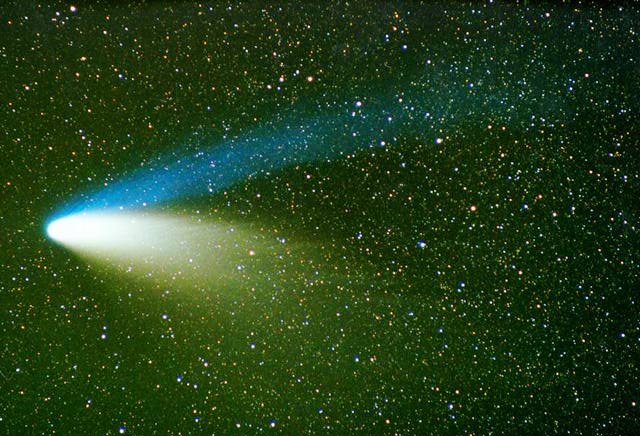
Astronomical Association of Cortina
Location: Passo Giau (2000 mt), Cortina d'Ampezzo (Italy)
Optics: 300 mm f/2,8 - Kodak Gold 400 II hypered.
4 minutes of exposure.
Last update: April 2, 1997
|
|
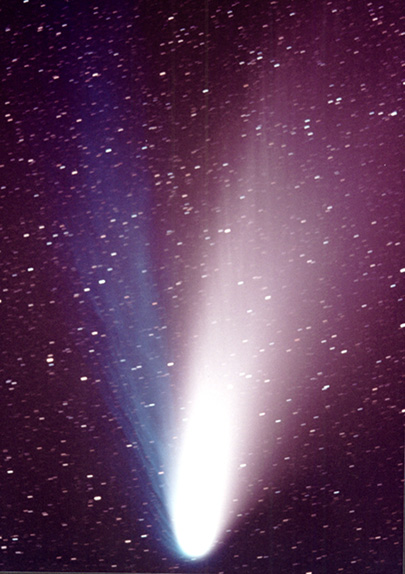
Author: Alessandro Dimai Astronomical Association of Cortina Location: Passo Giau (2000 mt), Cortina d'Ampezzo (Italy) Optics: 300 mm f/2,8 - Kodak Gold 400 II hypered. 4 minutes of exposure. |
|
|
Author: Bill Hutchinson (hutch@corecom.net) Location: Kenai National Wildlife Refuge, Alaska Optics: 180mm f2.8 using a Haig equatorial mount. Two minute exposure on Ektachrome 400X. This photo was taken at approximately 4:56AM Alaska Standard Time March 20th, the exact moment of the vernal equinox. Hale-Bopp was the first thing I saw this Spring. Another experience to remember. |
|
|
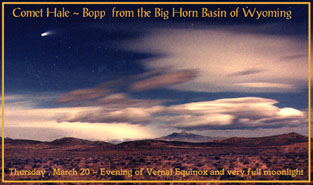
Author: Dewey Vanderhoff Location: Cody, Wyoming Optics: 35mm f/2 lens used at 2.8 and Fuji Super G-800. This photo was taken about six miles south of Cody Wyoming . They were exposed for about 40 seconds (any longer than that and the stars start trailing noticeably). Who says you can't observe on bright moon nights? Thank God, cameras and modern film are less night blind and color blind than human eyes at low light levels... |
|
|
Author: Stephane Potvin
(stephane.potvin.astro-physic@sympatico.ca) Location: St. Luc Dorchester, Quebec (Canada) Optics: 6" f/7 astro-physic's refractor telescope at prime focus and CCD SBIG ST7 camera. This is a 5 second exposure of Hale-Bopp's coma. |
|
|
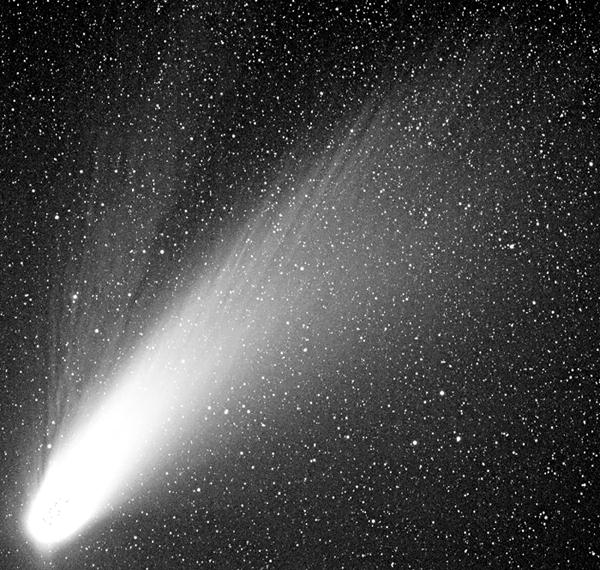
Author: Gregory
Terrance Location: Lima, New York 800 mtrs of height ; 42.41 deg of Lat. ; 12.1 deg of Lon. Optics: 200mm Olympus lens at f4, IMG1300 CCD camera. 6 minutes of exposure. ©1997 by Gregory Terrance. |
|
|
Author: Paolo Candy Location: Cimini Mountains, Viterbo (Italy) 800 mtrs of height ; 42.41 deg of Lat. ; 12.1 deg of Lon. Optics: Nikkor 400 mm f/2,8 on Losmandy mount + Deepsky Lumicon filter. Fujicolor NPH400 Prof. film Real color image. 32 minutes of exposure. guiding by C5 on comet nucleus. Very clear sky. (Electronic work by PhotoShop 3.0 into the studio of Gino Giordani - VT). |
|
|
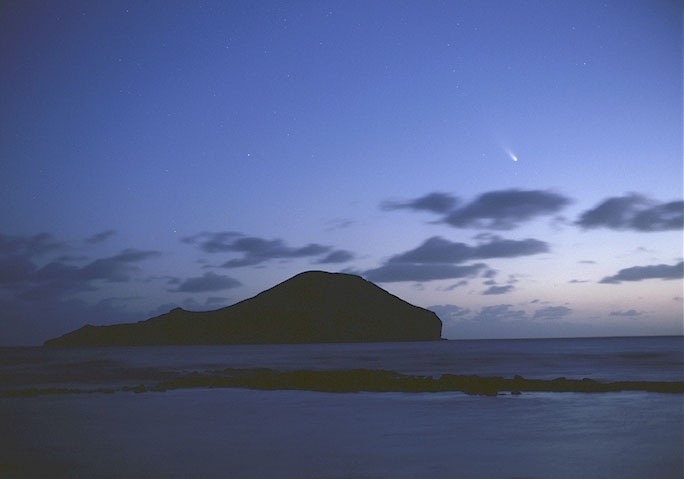
Author: University of Hawaii astronomer Richard J. Wainscoat Location: Manana island, commonly referred to as Rabbit island (Hawaii) Optics: Mamiya 645 Pro camera and 80mm f/1.9 lens (@f/2.8). 15 seconds exposure on Fuji Provia 400. Copyright© © 1997 Richard Wainscoat, All Rights Reserved. You may make a copy of this photo for personal or classroom use. Please contact Richard Wainscoat if you want to use this photo for other purposes. |
|
|
Author: Alessandro Dimai, and Renzo Volcan Astronomical Association of Cortina Localitat: Col Drusciè Observatory, Cortina d'Ampezzo (Italia) Optics: Takahashi 102 mm f/6 and kodak Pro gold 400 hiper. 5 minutes of exposure. |
|
|
Author: Bengt
Ask Location: a site 5 km from Svalov in southern Sweden (latitude 55d 54'). Optics:135 mm f/4. Fuji Super G 800 Plus film. 12 min. of exposure. Copyright©1997 Bengt Ask |
|
|
Author: Jim Young Location: JPL's Table Mountain Observatory, Wrightwood, California Optics:250mm telephoto lens mounted on a 35mm camera at f/4, using Kodak Ektachrome professional 1600 ASA film. 8 minutes of exposure. A meteor trail is visible in the photo. |
|
|
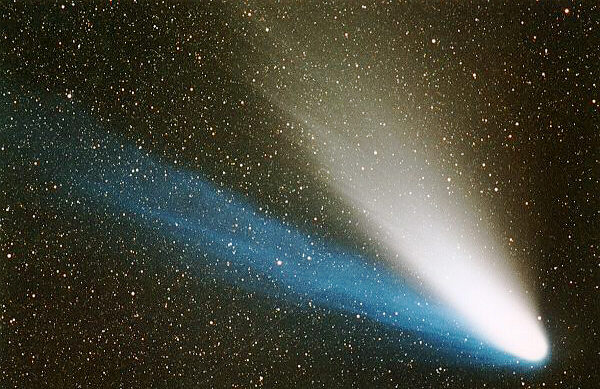
Author: Alessandro Dimai and Davide Ghirardo Astronomical Association of Cortina Location: Passo Giau (2230 mt), Cortina d'Ampezzo (Italy) Optics: Tele 300 mm f/2,8 - Kodak Gold 400 II hiper. 4 minutes of exposure. The comet was of magnitude -0.7 with a naked eye visible ion tail of ~18 deg. and a diffuse dust tail of ~10 deg. |
|
|
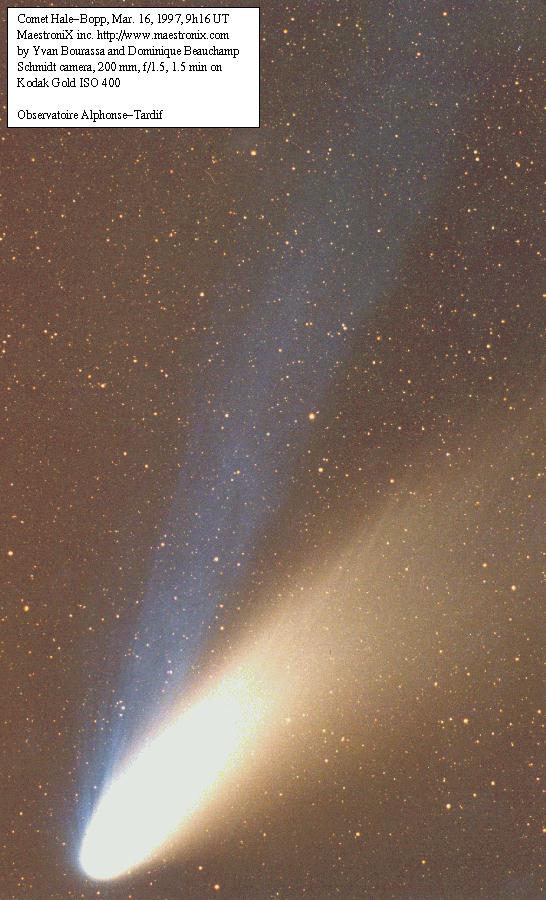
Author: Yvan Bourassa and Dominique
Beauchamp of MaestroniX inc. Location: Observatoire Alphonse-Tardif, St-Neree, Québec (Canada) Optics:20cm f/1.5 Celestron Schmidt camera (200mm, f/1.5). Kodak SuperGold ISO 400 film. 1.5 min. of exposure. Streams and knots are well seen in both tails. |
|
|
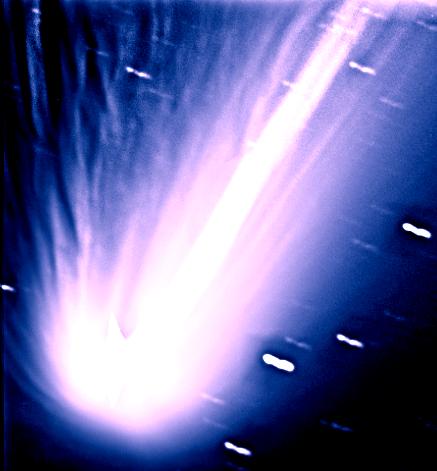
Author: Tim
Puckett Optics: 30cm reflector working at f/6. This false color image of Hale-Bopp is a composite of 30 -30 second exposures taken with an Apogee AP-7 CCD. The first exposure was taken on 03-16-97 at 10:21:52 UT, the last exposure was taken 10:49:52. The images were enhanced to show the jets from the nucleus. Copyright©1997 Tim Puckett |