
April 25, 1997
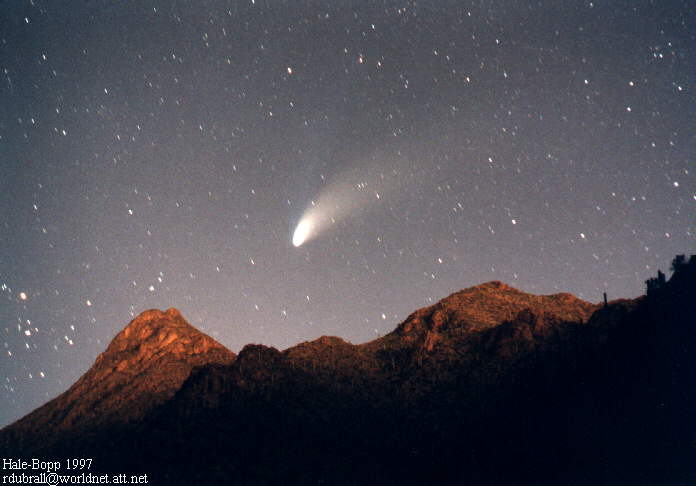
02:00-04:00 UT
Location: Saguaro National Park, Arizona.
Exposure: 60 second exposure, 50mm, F2.8 on Fuji 800.
The mountain tops are illuminated by Tucson city lights.
|
|
Author: Bob DuBrall Location: Saguaro National Park, Arizona. Exposure: 60 second exposure, 50mm, F2.8 on Fuji 800. The mountain tops are illuminated by Tucson city lights. |
|
|
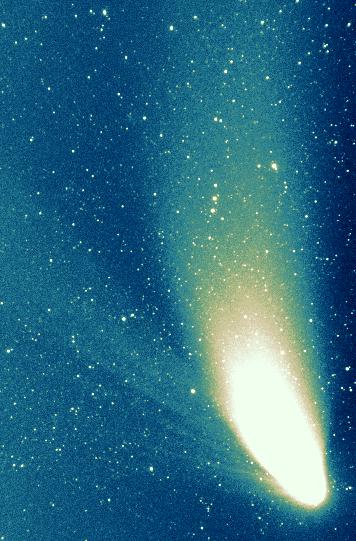
Author: Herman Mikuz Location: Crni Vrh Observatory (Slovenia) Optics: 2.8/90mm lens, CCD and V filter. Exposure time was 1 minute. The field of view is 7.5 x 5.0 degrees. |
|
|
Author: Gianluca Masi Location: Ceccano (Italy) 213 meters above sea level. Optics: Vixen SP R-150S, 15 cm f/5 reflector telescope; CCD SBIG ST-7. This image was processed with QMiPS32 using Larson/Sekanina algorithm to extract hidden features. |
|
|
Author: Paolo Candy Location: Astr. Station Club Parco dei Cimini, Viterbo (Italy) 800 mtrs of height ; 42.41 deg of Lat. ; 12.1 deg of Lon. Optics: Nikkor 135 mm f/2,8 on SP mount + JMI Mototrak V 80A + YA2 filters (Sodium trasmission) Exposure: 15 min. on Kodak TP 2415 Hyp. Guide by C5 on comet nucleus. Clear sky. |
|
|
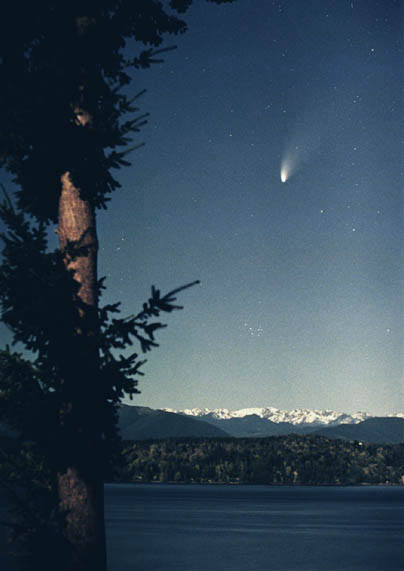
Observers: Dale Ireland |
|
|
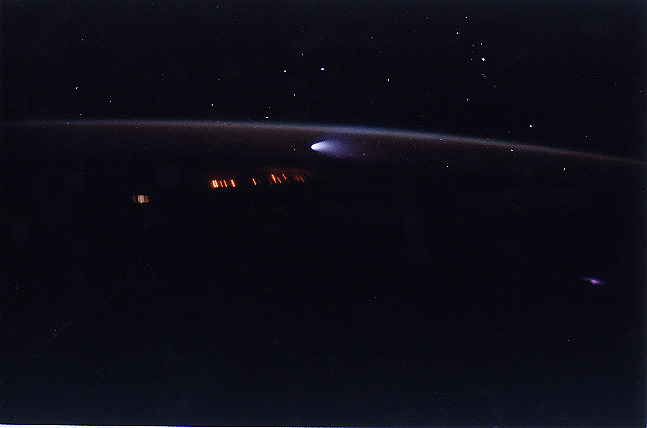
Observers: STS-83 Crew |
|
|
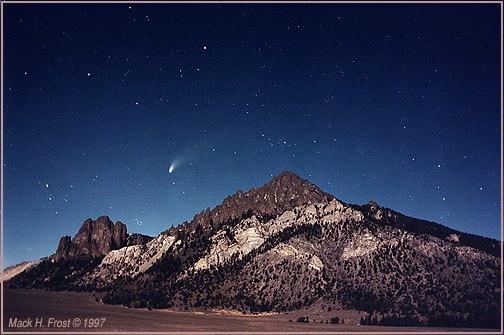
Observer: Mack Frost This photo shows a landmark mountain in the Sunlight Basin, a remote area to the northwest
of Cody, WY, between the town and the eastern side of Yellowstone National Park.
The peak is call "White" mountain due to the unusual white volcanic material exposed along
its flanks. Unusual for THIS area, where most of the Absaroka Volcanic region rock is a kind
of reddish purple in color. This mountain can be seen from the 8400-foot Dead Indian Pass
vista point along the Chief Joseph Scenic Highway, Wyo-296, but the highway does not go past
the mountain. The Sunlight Basin is accessed by a good county gravel road just off Wyo-296.
Until recently, this area was only accessable by means of a series of dirt roads, which have
since been improved and even paved in the past 5 years. The basin got its name because, back
in the good OLD days, it was said that nothing could get into that region except sunlight,
and they were damned near right, too! |
|
|
Observers: Fred Stauffer |
|
|
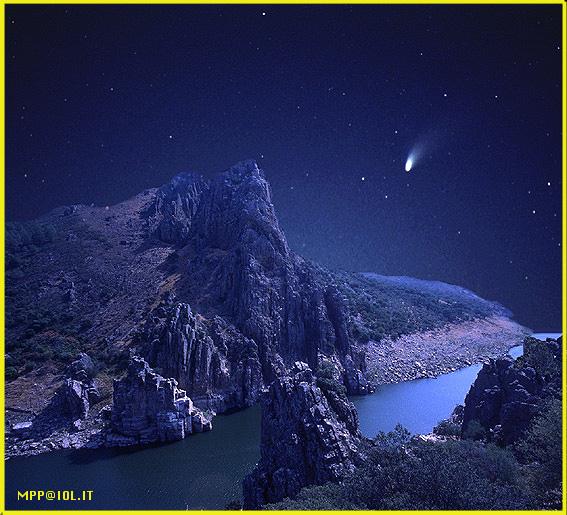
Observers: Francesca Lucentini, Marco Paolo Pavese |