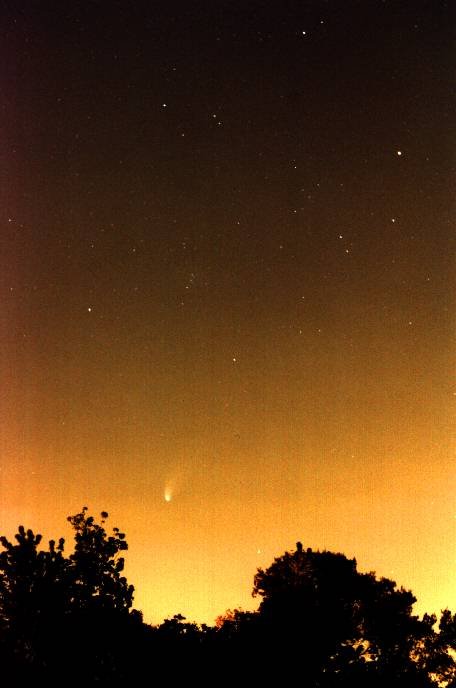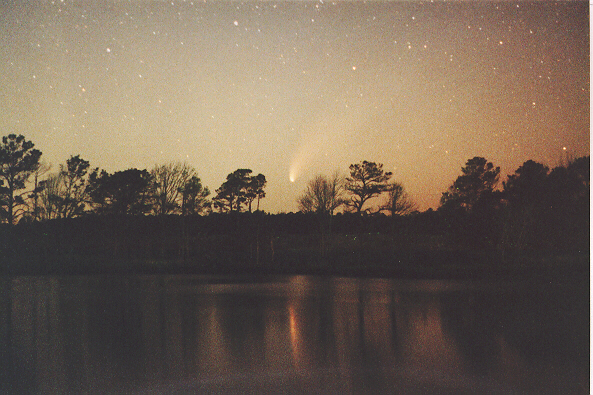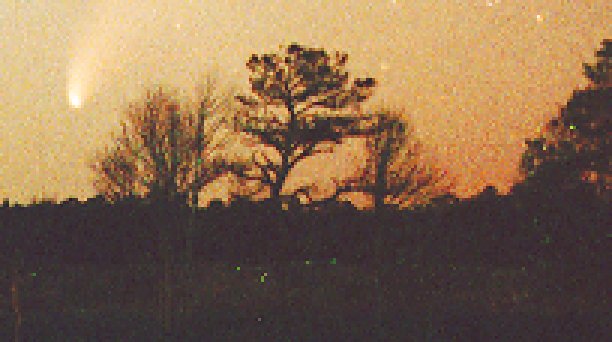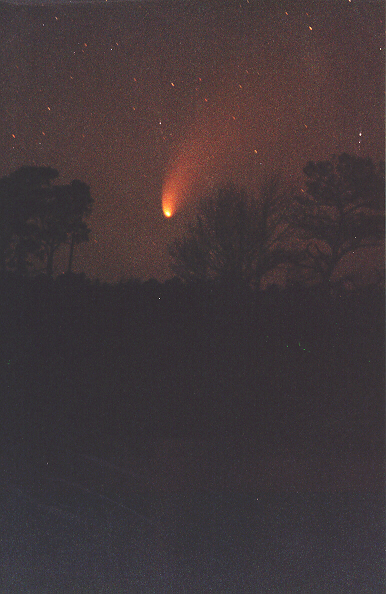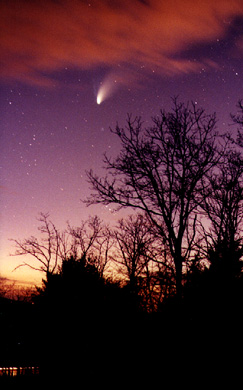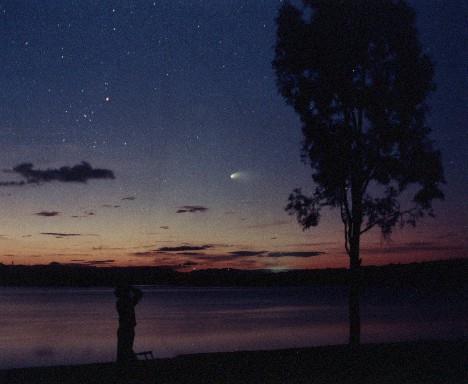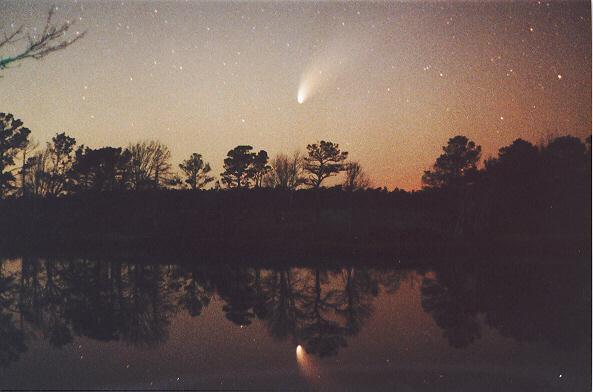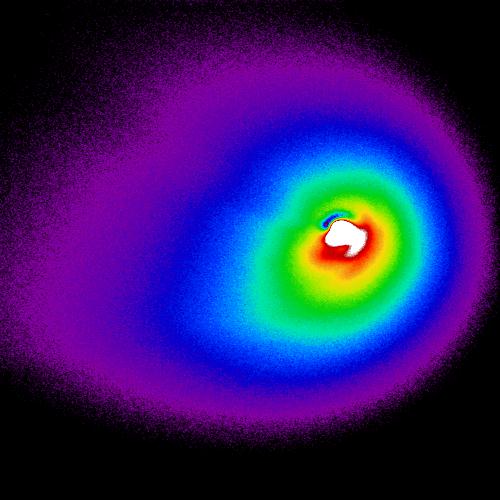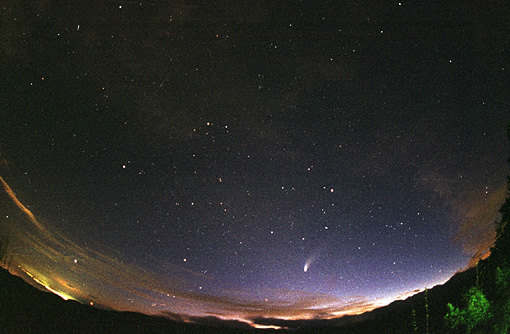
April 30, 1997
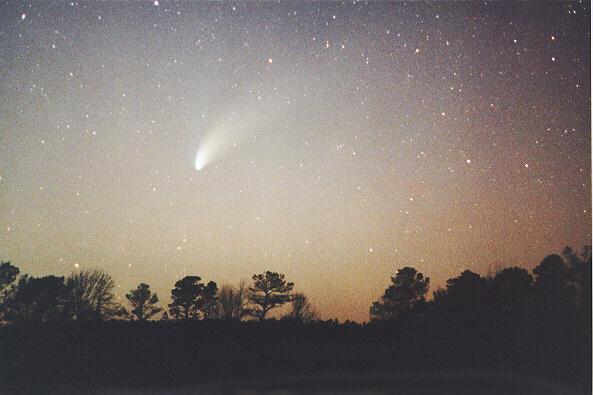
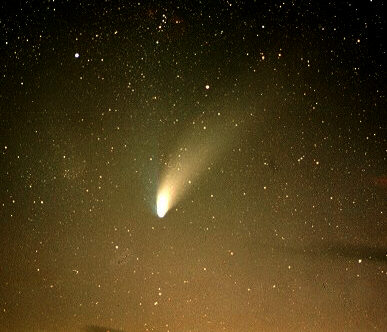
20:45 UT
Location:Los Roques, Tenerife Island (Spain)
Optics: 50 mm lens. Exposure: 30" unguided on Fuji 1600 film.
|
|
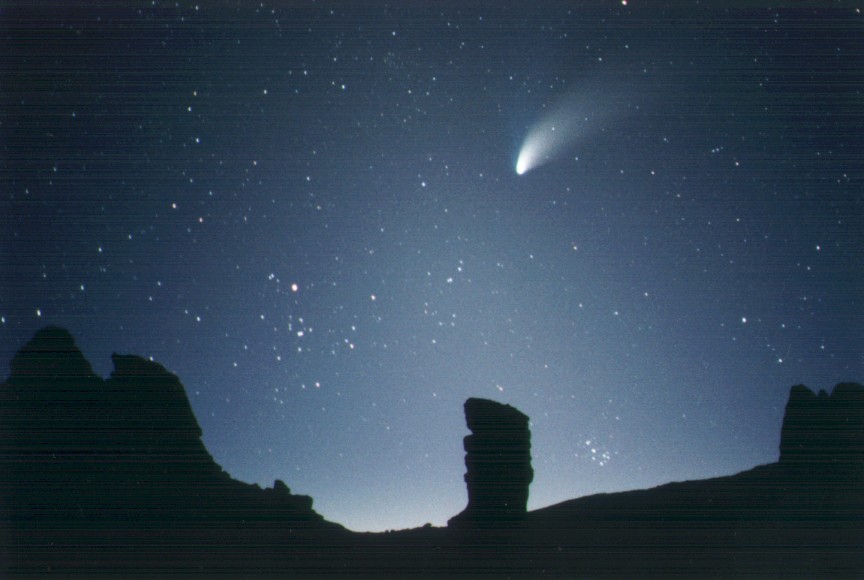
Author: Francisco Burguera Catala Location:Los Roques, Tenerife Island (Spain) Optics: 50 mm lens. Exposure: 30" unguided on Fuji 1600 film. |
|
|
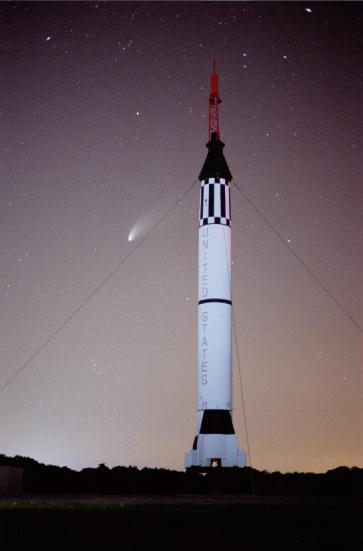
Author: Anthony Parra Location: Foster's Tower at Barcelona, Catalunya (Spain) Optics: 55 mm f/2.8. Fuji 400 super G film . 20 seconds exposure. Hale-Bopp at Auriga.
The sky was far from clear. The atmosphere had almost reached dew point
and scattered yellow light from the neighbour street lamps in a golden haze. |
|
|
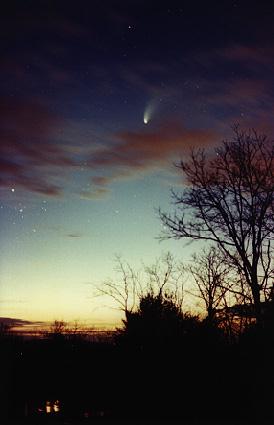
Author: Anthony Parra Location: Foster's Tower at Barcelona, Catalunya (Spain) Optics: 28 mm f/2.5. Fuji 400 super G film. This image is a mosaic of four 40 second exposures. Hale-Bopp is under Auriga, at right. Geminis and Canis minor are at center. Betelgeuse shines over a tree, under Geminis. |
|
|
Observer: Tim Forrest |
|
|
Observer: Tim Forrest |
|
|
Observer: Tim Forrest |
|
|
Observers: Giuseppe Menardi, Alessandro Dimai, Renzo Volcan, Davide Ghirardo Astronomical Association of Cortina Localitat: Col Drusciè Observatory, Cortina d'Ampezzo (Italia) Optics: 50 mm lens. Kodak Pro Gold 400 hyper. |
|
|
Observer: Steve Dunn |
|
|
|
Observer: Allen Bell |
|
|
Observer: Michael Horn |
|
|
Observer: Tim Forrest |
|
|
Observers: David McDavid |
|
|
Observers: Phil Fleming |
|
|
Observers: Francesca Lucentini, Marco Paolo Pavese |
|
|
Observers: Eric Rosen |
|
|
Observers: Eric Rosen Ion tail is still visible. |
|
|
Observers: Eric Rosen My best pictures so far. All photographs were taken at Saguaro National Park west section near Tucson, Arizona. The originals look muchg better than the scanned images. A fill flash was used to highlight the cactus. Living in Arizona I thought it would be perfect to have the signature cactus of the old southwest in a photo with the great Hale-Bopp comet of 1997. As the saguaro stands centinal over the sonoran desert of the southwest and in Arizona, the great celestial object of the century is wisking by while we are about to bid farewell to the largest comet of the century. Photo was taken with a Pentax P30T 50mm F2.8 using Fugicolor 1600 print film. A flash was used to highlight the saguaros in the foreground. |
|
|
Observers: Jeremy Seftor |
|
|
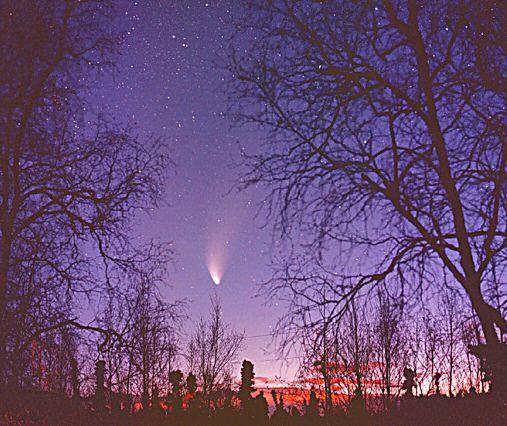
Author: Bill Hutchinson (hutch@corecom.net) Location:Kenai National Wildlife Refuge, Alaska Optics: Nikon N2020 50mm lens f/2.0, 20 seconds exposure on Fuji 400 HG. Now that the negative effect of moonlight is passed we have another uncompromising fact of nature to deal with. In our northern latitudes the sun's glow lights the horizon nearly all night. This shot taken close to 1:00AM April 27th demonstrates our predicament. Copyright©
1997 Bill Hutchinson |
|
|
Author: Bill Hutchinson (hutch@corecom.net) Location:Kenai National Wildlife Refuge, Alaska Optics: Nikon N2020 180mm lens f/2.8, 60 seconds exposure on Fuji 400 HG. In January and February I bragged about the advantages of our long dark nights in Alaska. Today the opposite is true. Even near 1:00AM local time the skies are too bright for a clear view of Hale-Bopp's ion tail. Another new development this week was that the comet, at less than 30 degrees declination, set below the horizon for the first time since mid February. For we Alaskans the show is nearly over and views like the one captured in this picture will be left to our memories and our photographs. Copyright©
1997 Bill Hutchinson |
|
|
Author: Bob Yen Location:Mojave Desert, California Optics: 610mm lens. Here is a very interesting image, showing how fan-like the ion tail has become, including kinks & wild striations. The explanation is the wild equatorial solar winds, scientists have been predicting in coming days. |
|
|
Autor:
Mitsuya Saeki , Nishiwaki Amateur Astronomical Group , Location: Hyogo, Japan. Optics: Sigma Zoom lens f200mm F2.8. Exposure: 8 minutes on FujiColor 800 SGA film. This image was taken from a mountain 800 m high, near Kobe. Guiding with a Takahashi type-I mount (no tach). |
|
|
Camp CometObservers: Dewey Vanderhoff This photo was taken from Boulder Creek along the South Fork of the Shoshone River in northwest Wyoming , as Hale-Bopp was setting over the ramparts of Ishawooa Mesa. My friend Kent Houston's VW Vanagon with roof raised makes for a great comet watching base camp and bierstube. I lit the tree with a weak flashlight from the camera position, and used my much stronger daylight-filtered flashlight to paint in the van from off camera. Back to photographing Hale-Bopp from the dark side of the Moon , it is obvious that the comet's tails have evolved a great deal recently. Visually, the blue gas tail is getting very elusive...it can only be seen with averted vision except under exceptionally dark skies. And we have some of the darkest skies in the Lower 48 at our disposal, here in the nether reaches of Wyoming. The bright dust tail seems to have actually grown in length this week ( contrary to other recent reports ). We estimated it Saturday night April 26 at a good 18 degrees. And it certainly is curving more. In my opinion, the dust tail is actually more photogenic than it was ten days ago. |